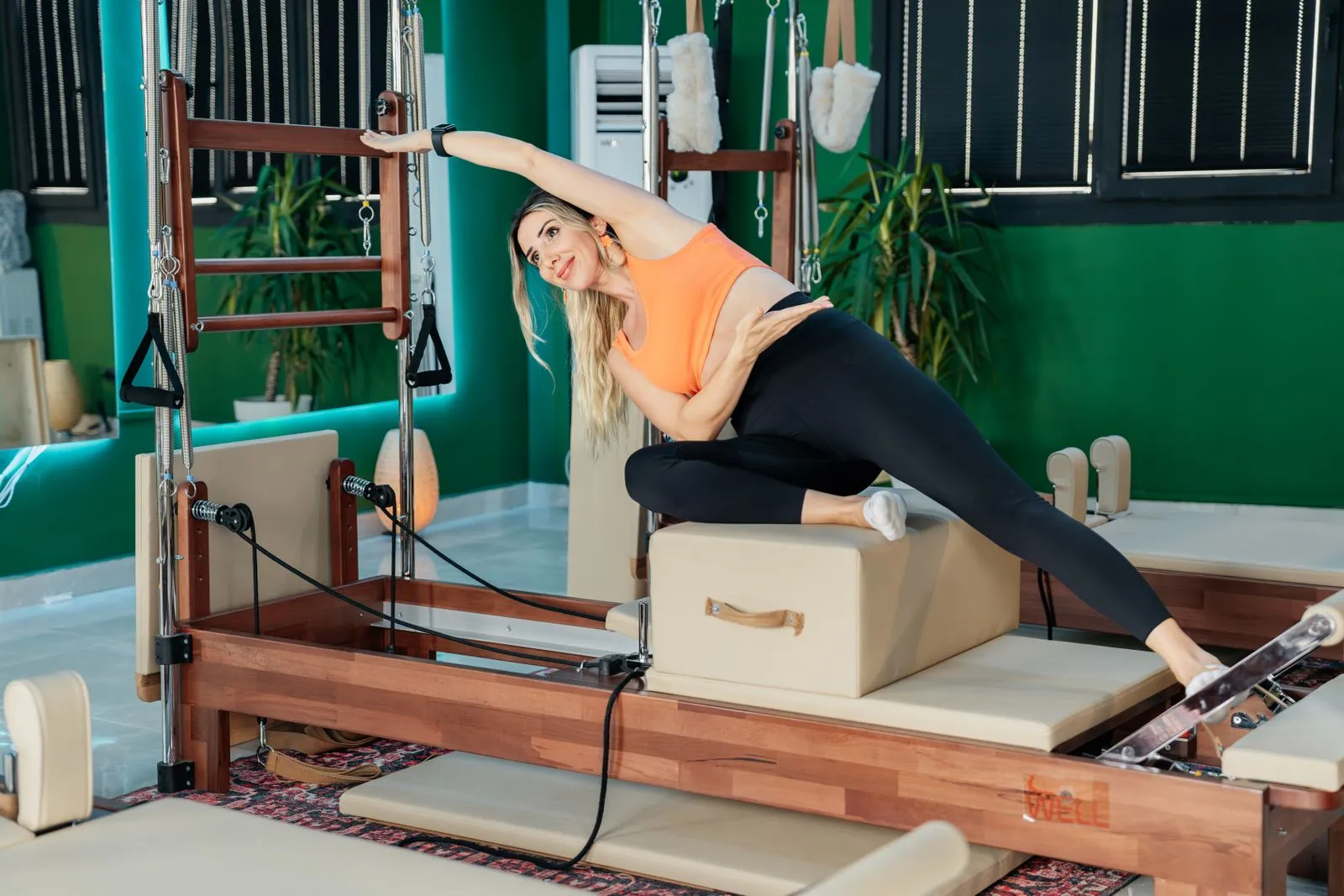
Your first Pilates class can feel easier when you know what to expect. Most classes guide you through controlled movements that build strength, balance, and body awareness. You don’t need prior experience or special athletic ability to begin. Wear comfortable clothes that let you move, arrive with time to settle in, and tell the instructor it’s your first class. Knowing the usual class flow can help you focus on learning rather than wondering what comes next.
Choose Comfortable, Close-Fitting Clothes
Wear stretchy clothes that stay in place as you bend, reach, and lie down. Leggings or fitted shorts with a comfortable top work well. Very loose clothing can shift during movement and make it harder for you or the instructor to see your alignment. Choose layers you can remove if you get warm, and avoid clothing with zippers or bulky details that may press against you on a mat or machine.
Check the studio’s guidance about socks before class. Some studios ask participants to wear grip socks, especially for equipment sessions; others may have different requirements. Bring a water bottle and, if the studio requests it, your own mat. You usually don’t need to bring much else. If you’re unsure, ask what the class includes and what equipment or clothing you should bring.
Expect a Gradual Class Flow
A class often begins with a brief welcome and an introduction to the equipment or movements. The instructor may ask about injuries, pregnancy, or other concerns that could affect how you exercise. Then you’ll move through a sequence of exercises, following demonstrations and verbal cues. Classes may use a mat, reformer, or other equipment, so the exact format depends on the session you booked.
Expect to move at a deliberate pace and pay attention to breathing, control, and alignment. The instructor may offer easier or more challenging options. You don’t need to keep up with every movement or make it look perfect. Pause when you need to, ask for clarification, and choose the version that feels manageable. Let the instructor know right away if something hurts or feels uncomfortable.
Arrive Ready to Settle In
Check your booking details for the address, class format, arrival instructions, and any studio policies. Aim to arrive early enough to check in, use the restroom, and get oriented without rushing. If it’s your first visit, mention that when you arrive. The instructor can explain where to place your belongings and help you understand the equipment before class starts.
Before class, eat and drink in a way that feels comfortable for you; avoid arriving overly full or thirsty. Share relevant movement limitations or concerns with the instructor privately. You don’t have to provide more personal detail than you’re comfortable sharing, but useful information helps the instructor suggest suitable adjustments. Silence your phone and give yourself a moment to focus before the session begins.
Focus on Learning, Not Performance
Pilates is not a test of flexibility or fitness. At a first class, your main job is to listen, try the movements, and notice how your body responds. It’s normal to need a cue repeated or to take a break. If you lose track of the sequence, wait for the next instruction rather than guessing with equipment or rushing to catch up.
After class, take a moment to notice what felt comfortable and what you’d like to ask about next time. Mild muscle effort can be expected, but sharp pain is a reason to stop and tell the instructor. A short conversation after class can help you understand any modifications and decide which class level or format may suit you going forward.
A little preparation can make your first Pilates class feel more welcoming: wear clothes that move with you, arrive early, and tell the instructor you’re new. Follow the cues, take breaks when needed, and focus on learning at your own pace. Contact Toronto Pilates Studio with questions about class formats or what to bring.